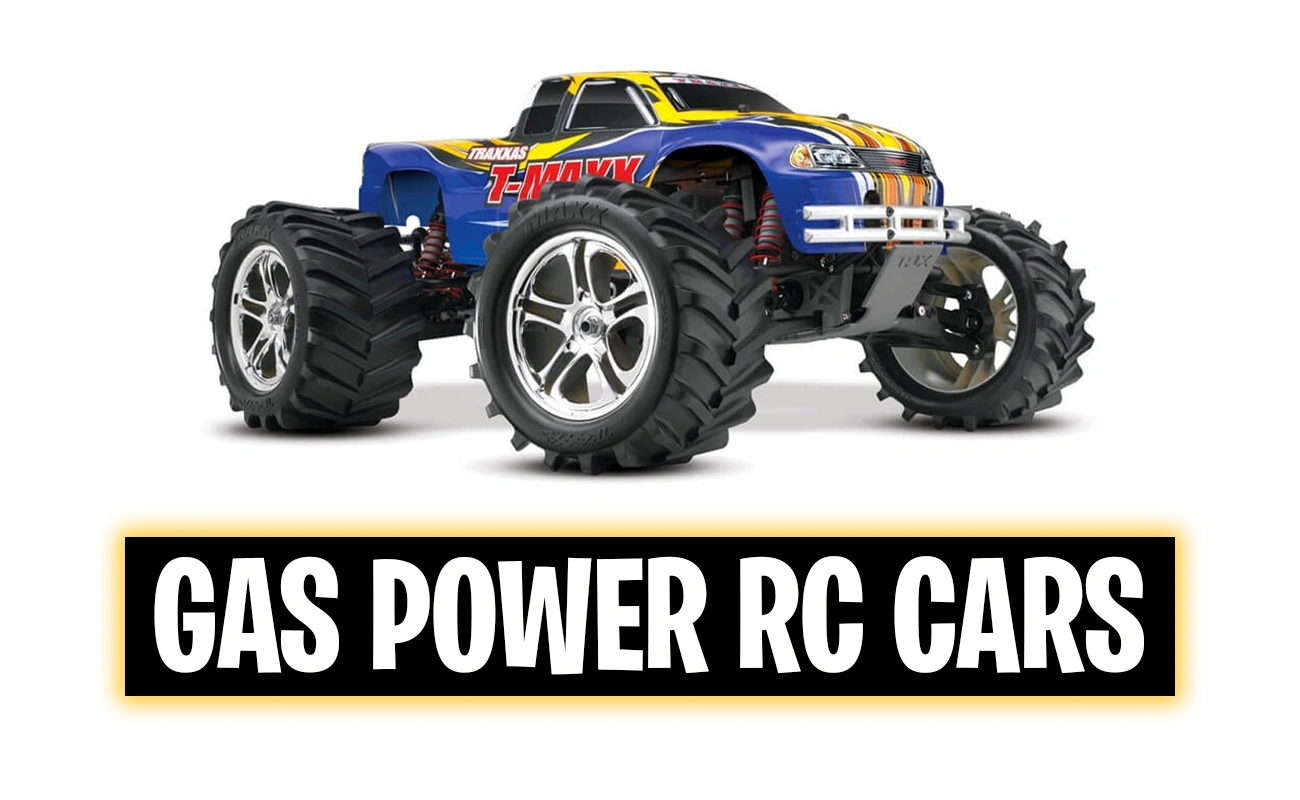
I still remember the first time I saw a proper Gas Power RC Cars running in real life. Not on YouTube—actually in front of me.
It wasn’t quiet. It wasn’t clean. It wasn’t smooth like electric.
It was loud, shaking, and honestly a bit intimidating.
That’s the whole point of gas RC cars.
It’s Not Just Driving… It Feels Like Running a Machine
When you get into gas-powered RCs, you’re not just picking up a controller and
driving. You’re kind of dealing with a small engine—like a mini dirt bike or
something.
You’ve got fuel. You’ve got a pull-start. You’ve got that moment where you’re
pulling the cord and wondering, “is this thing going to start or not?”
And when it finally does… that sound hits different.
It’s not that high-pitched nitro scream. It’s deeper. More like a real off-road
truck. You feel it in your hands too—the vibration goes through the whole
chassis.
That’s the part that hooks people.
The First Thing You Notice: It Just Keeps Going
If you’re coming from electric, the biggest difference is runtime.
With something like a Team Losi 5IVE-T 2.0 V2 or even a Redcat Rampage MT V3,
you’re not thinking about batteries dying every 20 minutes.
You fill the tank… and you’re good for a long session.
I’m talking 30–40 minutes easy if you’re not going crazy on the throttle.
Sometimes more.
That changes how you drive. You don’t rush. You don’t feel like you have to “use
the battery before it dies.” You just run it.
But Yeah… It’s Not Plug and Play
Let’s be real here.
Gas RC cars are not beginner-friendly in the usual sense.
Before you even start driving, you’re mixing fuel. Gasoline + 2-stroke oil. You
have to get the ratio right. Too much oil, it runs weird. Too little… you’re risking
damage.
Then starting it is its own process.
Prime the fuel. Pull the choke. Pull-start it. Sometimes it fires instantly.
Sometimes it doesn’t. Sometimes it almost starts and then dies, and you’re just
standing there pulling the cord again like an idiot.
You get used to it. But in the beginning, yeah—it can be frustrating.
Once It’s Running… That’s Where It Makes Sense
The driving feel is completely different from electric.
Electric is instant. You tap the throttle, it jumps.
Gas builds up. It revs. There’s a slight delay, then it pulls.
At first, it feels slower. Then you realize it’s not—it just delivers power
differently.
Most of these trucks—like the HPI Baja 5T or Rovan LT450—can hit around 40
50 mph stock. That’s fast enough that you actually need space. You’re not
running this in a small area.
And the weight… that’s another thing.
These aren’t light. You’re dealing with something that can be 15–20 pounds or
more. When it moves, it has momentum. It feels planted, especially at speed.
Maintenance Is Where Most People Quit
This is the part nobody wants to hear, but it’s important.
You have to maintain it.
Not in a scary way, but consistently.
Air filter gets dirty—clean it. Fuel lines—check them. Bolts—tighten them. Spark
plug—inspect it once in a while.
And then there’s tuning.
The carburetor has these little screws (needles), and small adjustments change
how the engine runs. Too lean, it overheats. Too rich, it feels sluggish.
At first, it feels confusing.
But after a while, you start understanding it. You hear the engine and just know
something’s off. That’s when it becomes satisfying.
Gas vs Electric… It’s Not About “Better”
People always ask which is better.
Honestly, wrong question.
Electric is easier. Clean, fast, simple. You press a button and go.
Gas is… more involved.
You deal with fuel, noise, smell, maintenance—but in return, you get something
that feels real.
It’s more like owning a machine than just using one.
Nitro sits somewhere in between, but a lot of people actually find gas easier
than nitro long-term because it’s more stable once tuned.
Buying One… Think Before You Jump In
These aren’t cheap.
Even something basic can start around $500–$700. Once you go higher—like the
Team Losi 5IVE-T 2.0 V2—you’re easily over $1,000.
And that’s just the car.
You’ll need fuel, oil, tools, maybe a starter box, spare parts… it adds up.
If you’re thinking of buying used, check everything carefully. Engine
compression, smooth pull-start, no weird noises. A bad engine can turn a “good
deal” into a headache fast.
Small Problems You’ll Definitely Run Into
At some point:
• It won’t start
• It’ll start and then die
• It’ll run fine… then suddenly lose power
• Something will come loose because of vibration
It happens.
Most of the time, it’s something small—fuel mix, dirty filter, loose bolt.
You just troubleshoot step by step.
So Who Is This Actually For?
Not everyone.
If you just want to drive and relax with no effort, electric is better. No question.
But if you like the idea of working on something… understanding it… hearing it
come to life and knowing you made it run right—
then gas RC cars make a lot more sense.
Final Thought
Gas RC cars aren’t perfect. They’re noisy, messy, and sometimes annoying.
But they don’t feel like toys.
They feel like machines you have to respect a little.
And once you get used to that… it’s hard to go back.