The Fastest RC Cars in the World: What It Actually Takes to Hit Insane Speeds
I still remember the first time I saw a video of an RC car blowing past 100 mph. My buddy sent it to me at like 11pm with no context, just “watch this,” and I genuinely thought it was sped up footage. It wasn’t.
That little car was moving faster than most people drive on the highway, and it got me down a rabbit hole that I’m still in years later.
If you’ve ever searched for the fastest RC cars in the world, you’ve probably noticed the numbers get a little ridiculous. We’re not talking about your average backyard basher anymore — we’re talking purpose-built machines that exist for one reason: going as fast as physically possible in a straight line.
What “Fast” Actually Means in This Hobby
Before getting into specific cars, it’s worth setting expectations. A typical hobby-grade RC car, the kind you’d buy off the shelf and bash around with friends, tops out somewhere between 25 and 45 mph.
That’s plenty fun for most people. But the speed run community operates on a completely different level, and the gap between “fast RC car” and “fastest RC cars in the world” is enormous.
The current benchmarks for the fastest RC cars in the world sit well above 100 mph, with some specialized builds creeping toward 200 mph. To put that in perspective, that’s faster than a lot of real cars can go.
Electric vs Nitro: The Eternal Debate
This is where things get interesting, and honestly where a lot of arguments happen in RC forums.
Nitro Cars
Nitro cars used to dominate the speed scene. They run on a fuel mixture (methanol, nitromethane, and oil), and the engines can spin at insane RPMs.
The sound alone is addictive — that high-pitched scream is unmistakable.
Nitro cars can hit impressive speeds, but they have downsides:
- They need tuning
- They’re messy
- They require warm-up time
- Performance fluctuates with altitude, temperature, and fuel mixture
Electric Cars
Electric cars, on the other hand, have basically taken over the top-speed scene in the last decade.
Brushless motor technology improved so dramatically that electric setups now blow nitro out of the water for pure top speed.
With the right motor, battery (usually high-discharge LiPo packs), gearing, and ESC (electronic speed controller), electric cars can accelerate harder and hit higher terminal velocities than most nitro setups.
The catch with electric speed builds is heat management and battery demands.
When you’re pulling huge amps through a motor at full throttle for even a few seconds, things get hot fast. Burned-out motors and melted ESCs are basically rites of passage in this hobby.
The Actual Speed Run Records
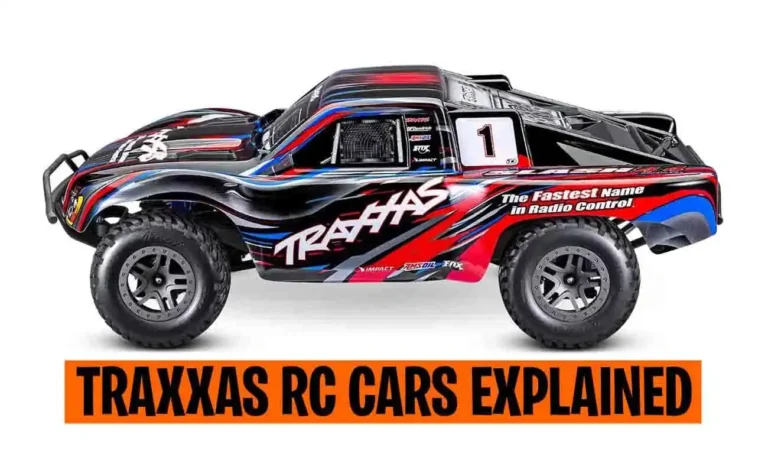
The names that show up again and again in speed run circles are cars like the Traxxas XO-1, which was one of the first mass-produced RC cars to officially break 100 mph (it hit around 100 mph stock, which was wild for its time).
But the real records come from heavily modified builds.
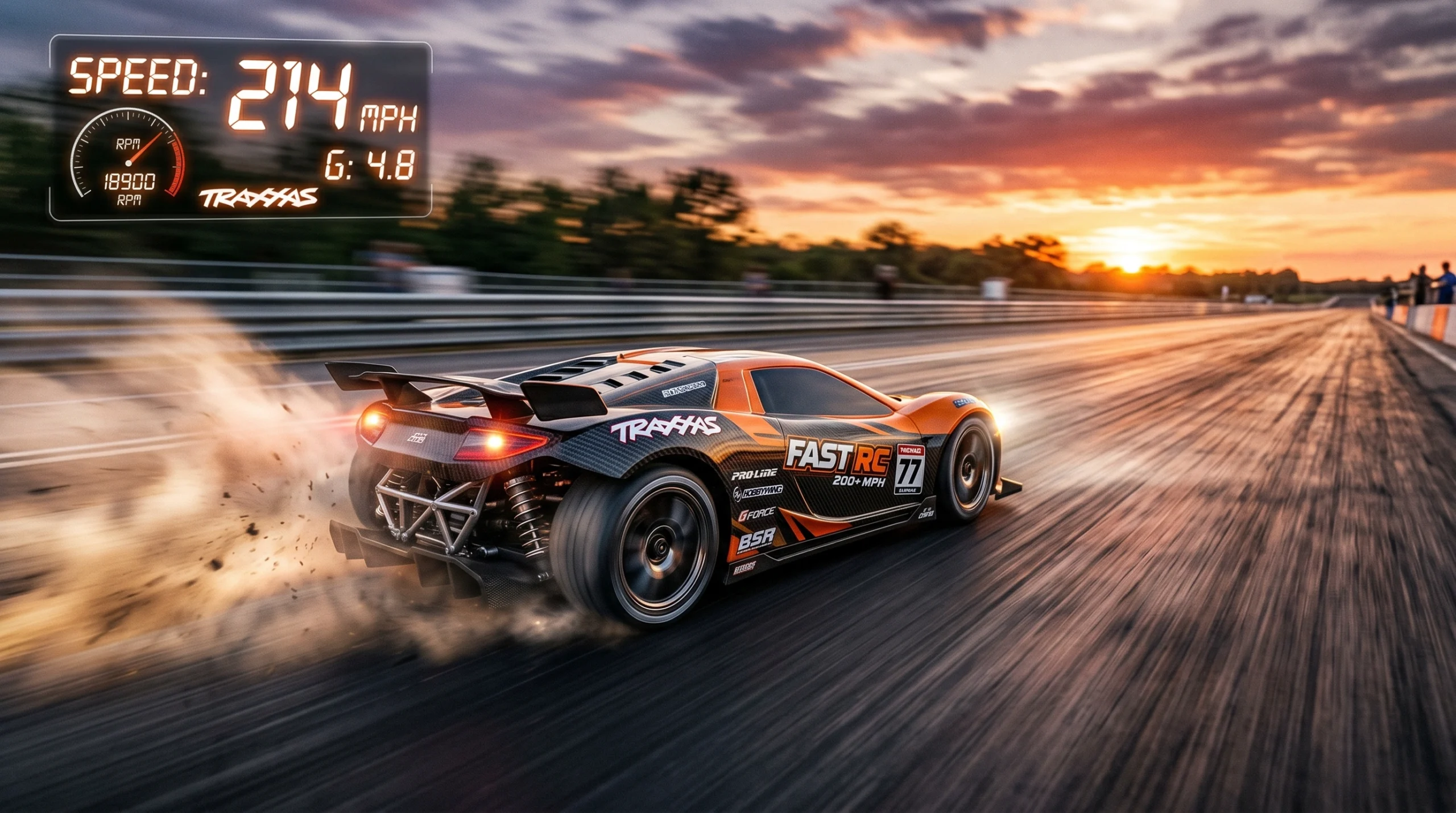
Hobbyists running custom 1/10 scale chassis with massive brushless motors, low-profile speed run bodies (those long, narrow shells you see that look nothing like a real car), and aggressive gearing have pushed speeds past 150 mph, with some documented runs claiming numbers near 190-200 mph under ideal conditions.
It’s important to mention that these record runs almost always happen on:
- Long, flat, smooth surfaces (airport runways, dry lakebeds, closed roads)
- Calm wind conditions
- Specific gearing setups that sacrifice everything else for top speed
- Custom-built bodies designed purely for aerodynamics
These aren’t cars you drive around the neighborhood. They’re built for one run, sometimes one direction, and that’s it.
Modifications That Actually Move the Needle
If you’re chasing speed, here’s what actually makes a difference based on what I’ve seen (and tried, with mixed results):
Motor and Gearing
This is the big one.
Swapping to a higher KV motor and adjusting your pinion/spur gear ratio changes everything about top speed versus acceleration.
Higher KV means more RPM potential, but you need enough straightaway to actually reach it.
Battery Setup
Going from 2S to 4S or even 6S LiPo dramatically increases voltage and potential speed, but it also massively increases stress on your motor and ESC.
This is where a lot of builds die — literally, with smoke.
Tires
Speed run tires are usually slick or low-profile, designed to reduce rolling resistance.
Regular off-road tires create way too much drag at high speed.
Aerodynamic Bodies
Those weird, elongated speed run shells aren’t just for looks.
Stock RC car bodies create a ton of lift and instability at high speed, which brings me to the next point.
Weight Distribution and Stability Tuning
At 100+ mph, even tiny imperfections in alignment or balance cause violent crashes.
Some builders add small wings or splitters just to keep the car grounded.
Safety: This Part Actually Matters
I’ll be honest, this is the part people skip over because it’s not as exciting as the speed numbers, but it’s the most important part.
When an RC car is moving at 100+ mph, it is not a toy anymore.
It has real kinetic energy.
If it hits a person, a pet, a parked car, or even just a curb wrong, the results can be genuinely dangerous — both to property and to people.
Speed runners almost always:
- Use closed courses with no spectators in the direct path
- Run early morning when wind is minimal and areas are empty
- Wear safety glasses (battery failures and motor explosions happen)
- Keep a fire extinguisher nearby for LiPo fires, which are no joke
- Use transmitter fail-safes so the car doesn’t go full throttle if signal is lost
I’ve seen videos of high-speed runs where the car clips a tiny pebble and instantly disintegrates.
At those speeds, there’s basically no room for error.
Is Extreme Speed Actually Practical?
Honestly? No, not for everyday use.
And most serious speed run hobbyists will tell you the same thing.
A car built to hit 150+ mph is usually:
- Geared so high it struggles with low-speed control
- Fragile in ways that make it unsuitable for regular driving
- Expensive to maintain, especially batteries and motors that take repeated abuse
- Only usable in very specific locations
For most people, a car that comfortably does 40-60 mph is the sweet spot — fast enough to be thrilling, durable enough to actually enjoy regularly, and far less likely to end in a $300 pile of carbon fiber and melted electronics.
That said, there’s something genuinely satisfying about building a car specifically to chase a number.
It’s less about practicality and more about the challenge — seeing how far you can push a small electric motor and a battery pack before something gives out.
Final Thoughts
The fastest RC cars in the world represent a strange intersection of hobby tinkering and legitimate engineering.
What started as kids racing toy cars in driveways has turned into a niche where people genuinely push the limits of small-scale vehicle physics, sometimes with results that rival real vehicles.
If you’re getting into this, my honest advice is to build for fun first, then chase speed once you understand how your setup behaves.
Speed is addictive, but control is what keeps the hobby enjoyable long-term.
And if you do build something fast, find an open space, bring backup batteries, and respect just how much energy you’re dealing with — because at those speeds, even the fastest RC cars in the world can turn into expensive lessons in physics pretty quickly.