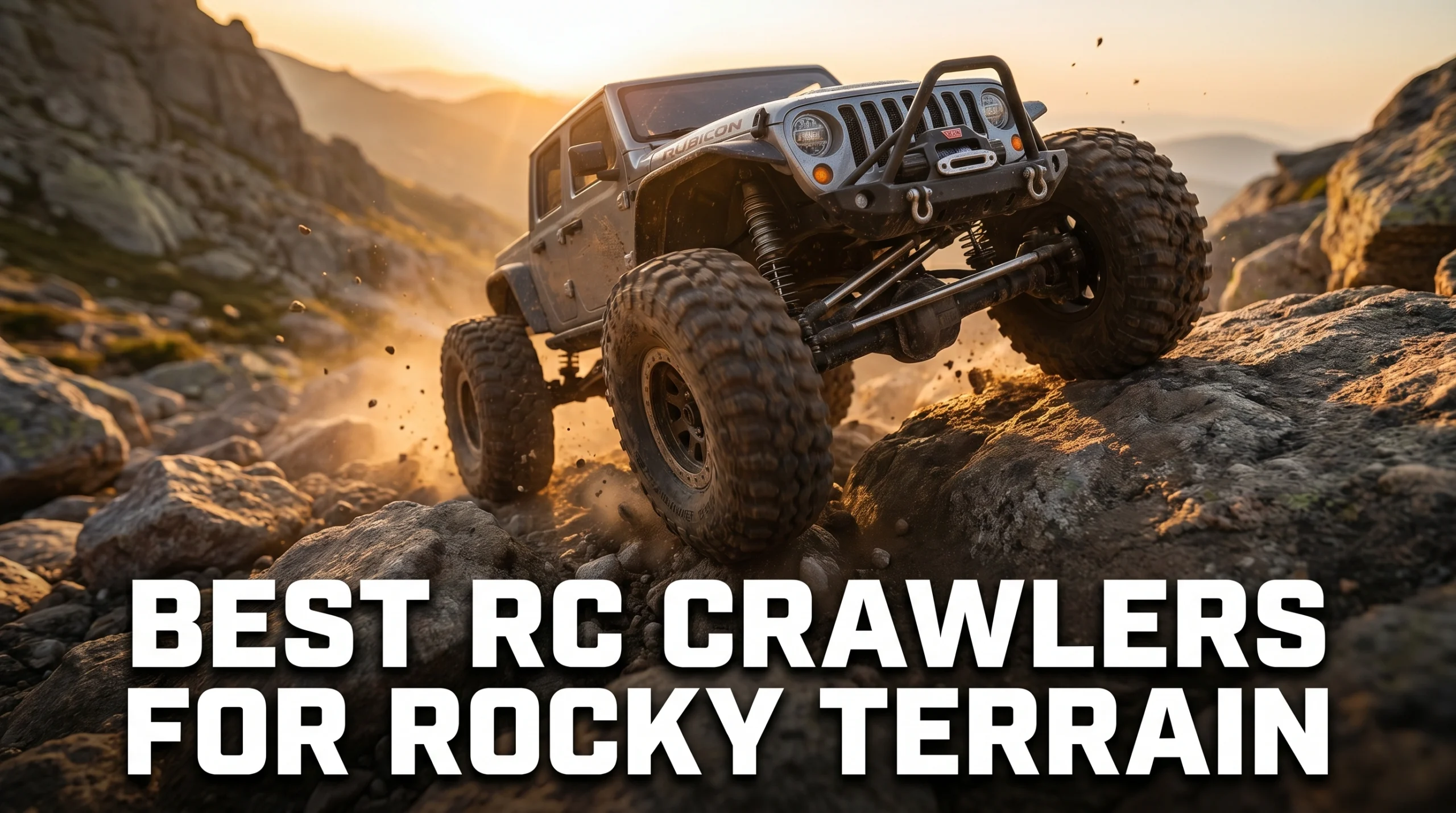
If you’re looking at the best RC crawlers for rocky terrain, I’m going to tell you what I’ve actually found works versus what sounds good in a YouTube unboxing video.I’ve spent way too much time—and way too much money—getting these tiny trucks stuck on rocks, unstuck from rocks, and then deliberately stuck again because I wasn’t done testing.
Why Rocky Terrain Is Completely Different From Everything Else
Here’s the thing nobody really talks about: scaling a full-size truck’s handling down to RC size doesn’t work the same way. When you’re picking your way through actual rock gardens, it’s not about raw power. It’s about precision, patience, and having the right combination of mechanical components working together. You need crawlers that understand nuance.
I’ve destroyed more than a few trucks trying to brute-force rocky sections with high-torque builds and locked differentials set too tight. That’s not driving a rocky trail—that’s wrestling with a truck that wants to climb things in ways that aren’t anatomically possible for its geometry.
Suspension Performance: The Real Deal
This is where the separation happens. Suspension on rocky terrain isn’t about looking impressive in photos. It’s about how many times your rig can articulate before something breaks, and whether it actually maintains tire contact with the rock.
A good crawler suspension needs travel—real travel. Not just impressive on paper, but actual vertical movement that lets the chassis float above obstacles. I’m talking about setups where you can watch the wheels independently hunting for grip while the rest of the truck stays relatively stable.
The best RC crawlers for rocky terrain have suspensions with:
Proper geometry. The angles matter more than most people realize. Too much compression and your truck “porpoises,” bouncing up and down instead of flowing over obstacles. Too little and you’re basically running a rigid axle on rocks, which is a nightmare.
Layered compliance. You need flex at multiple points—in the suspension links, at the motor mounts, maybe even through the chassis itself. This isn’t just theoretical. When a truck can move smoothly instead of harshly, it maintains grip longer and prevents that jerky, out-of-control feeling on boulder fields.
Not too soft. I see a lot of newer crawlers go way too soft with their springs and shocks, treating them like trail trucks rather than rock crawlers. You end up bottoming out constantly, and your articulation becomes random instead of controlled. It’s a balancing act.
I’ve spent Saturday mornings on rocky creeks watching my Axial builds absolutely dominate while newer rigs from other companies struggled. The difference? The Axial platform has spent over a decade refining how suspensions actually work on small rocks. That experience is baked into the design.
Tire Grip: More Nuanced Than You’d Think
Everyone wants to talk about tire compound and tread pattern, but I’m telling you—the actual rock contact is what matters most. You can have the “best” tires in the hobby and still slip if they’re not designed to dig in slightly without rolling over.
Compound matters, but not how most people think. Harder compound tires maintain their shape under load and actually bite into rock better. Softer compound? They squish and conform, which sounds like it should grip more, but on actual rocks, you often just get slipping without traction. The sweet spot is medium-hard compound on dry rocks, though it changes if it’s damp.
Tread pattern does work, despite what you see on actual rock-crawling videos where no tread matters because the tire sidewall is doing the work. A tread pattern designed for rocky terrain helps with small rock edges and prevents the tire from sliding sideways. It’s not huge, but it helps.
Sidewall thickness is huge. This is the part I genuinely care about. Thin-wall tires look amazing and weigh less, but they’re sketchy on rocks because they deflect too much, and that kills consistency. Thicker sidewalls mean the tire maintains its shape, your contact patch stays predictable, and you’re actually steering the truck instead of just hoping it goes where you want.
The OEM tires on most quality crawlers are decent enough to start. Upgrade when you need to, but don’t assume expensive aftermarket tires are automatically better. I’ve run budget rubber that performed excellently once broken in.
Low-Speed Crawling Control: Where the Driving Happens
This is what separates a toy from a real crawler. Anyone can point a truck uphill and gun it. Actual rock crawling is about moving inches per second while maintaining steering response and balance.
Servo responsiveness matters more than you’d expect. On rocks, you’re making tiny steering corrections constantly. A servo that’s laggy or jerky makes everything feel out of control even if the truck is performing fine. I prefer standard servos over digital when crawling rocky terrain because they just feel more immediate and natural, even if they’re technically less precise.
Throttle control needs to be smooth. Electronic speed controllers with soft ramp-up and good low-end resolution let you crawl without the truck lurching forward. This is why some budget crawlers feel terrible on rocks even with good mechanics—the ESC programming is choppy. Hobbywing and Castle make solid ESCs. Avoid anything cheap that tries to be everything to everyone.
Weight distribution makes a real difference. Front-heavy crawlers are way harder to control on rocky terrain because they want to climb everything instead of letting you choose your line. Mid-engine or rear-biased weight distribution feels more natural and gives you better control at low speeds. This is architecture, not something you can really fix with setup tweaks.
I tested this obsessively by moving batteries around, and it’s real. Move the battery pack 2-3 inches and you can feel the behavior change on rocks.
Durability: Because Rocks Are Brutal
Every truck has a failure point. The question is whether it fails at something replaceable or something that ruins your weekend.
Plastic versus metal is a real decision. Full metal crawlers are incredibly popular, but they’re actually worse for rocky terrain because they don’t give anywhere. A rock hits a metal part, and something else breaks. Plastic flexes and absorbs impact, then you just replace the plastic part. I’ve broken far fewer expensive crawlers by keeping some plastic components.
Axle strength matters on rock. You need at least some beef in your driveshafts and axles because sudden impacts are constantly happening. Aluminum shafts? I’ve snapped them. Thicker steel versions hold up better, though they’re heavier. It’s worth it.
Bearing durability is real. Rocks and dirt get everywhere, and your bearings will collect debris no matter how sealed they are. Quality bearings last longer and are easier to maintain. Cheap sealed bearings just degrade faster and you replace them anyway.
The best RC crawlers for rocky terrain tend to use proven designs that have been tested by people who specifically use them on rocks. That matters more than chasing whatever looks coolest.
Beginner Options: Don’t Start With Overkill
Here’s my honest take: you don’t need a $600 rig to figure out if you enjoy rock crawling. But you also don’t want to buy something so basic it’s discouraging.
Traxxas TRX-4 is still the entry point for a reason. It’s not the best at anything, but it’s genuinely competent at everything, and the parts are everywhere. You can break something and fix it the same day. The suspension feels a bit soft out of the box for rocks, but it’s adjustable and doesn’t cost much to upgrade. It teaches you the skills without requiring expensive customization.
Redcat Everest Gen 7 is legit underrated. It’s cheaper, the electronics are decent, and it actually handles rocky terrain pretty well right out of the box. The chassis feels a bit stiff, but that’s actually not a bad thing for beginners learning rock crawling.
Axial SCX24 if you want something smaller and want to learn on a budget. Yes, it’s scaled really small, but that actually helps beginners because mistakes don’t cost as much money. The truck crawls well for its size, and the community is huge.
What I’d avoid: cheap no-name rigs that look like the real thing. They’re frustrating because you can feel something isn’t right, and you’ll just want to upgrade everything immediately.
Common Issues I’ve Hit and How to Avoid Them
Turning radius. Some crawlers just don’t steer sharp enough on rocks, and it limits your actual driving options. Test how tight the truck can turn before buying. This is not obvious from specs.
Tip-over tendencies. A truck that rolls on its side constantly isn’t fun, and you’re constantly flipping it back. This usually means the suspension geometry is off, and there’s not much you can do about it without serious modification.
Sloppy chassis flex. Some trucks just feel… loose. Like the chassis is twisting independently from the suspension. This is usually poor design and you’re stuck with it.
Heat on the motor. Cheap motors and ESCs overheat on rocks because you’re running at low speed with high load constantly. Better components actually run cooler because they’re more efficient. This matters on long sessions.
What I Actually Run When I’m Testing
I’ve got a couple rigs that have become my benchmarks for evaluating other crawlers:
An Axial Wraith, completely rebuilt with modern parts. This thing is ancient by hobby standards but genuinely climbs rocks better than newer expensive rigs. It’s not fancy, but it teaches you what crawling actually feels like.
A Trail Finder 2 LWB setup for rocks rather than trails. Took a long time to dial in, but once I did, it’s the most controllable rig I own on technical terrain. The problem is it’s finicky, so it’s not a beginner truck.
A stock TRX-4 that I’ve been running basically unchanged. It’s useful for reminding myself what beginner-friendly actually means, and it honestly still surprises me how capable it is.
The Honest Take
The best RC crawlers for rocky terrain aren’t always the most expensive or the newest. They’re the ones where the designers actually understood what happens when small tires meet actual rocks. Most of the time, that’s a platform that’s been around for a few years and has had real feedback from people actually using them on rocky terrain.
Setup matters too. A mediocre crawler dialed in properly will outperform an expensive one running loose. Tires broken in, suspension adjusted for your driving style, gear ratios matched to your terrain—that stuff is the real difference.
And honestly? Most of the joy is just getting out there with a truck that’s reasonably capable and spending time on the rocks. You learn something every single session about how these things work, and that’s the real appeal of rock crawling.
If you’re starting out, don’t overthink it. Get something proven, learn the fundamentals, and upgrade when you actually understand what you’re upgrading. The best crawler is the one you’re going to take out on rocks regularly, and that’s usually the one that balances capability with simplicity.