Best Places to Drive RC Cars Outdoors
There’s something completely different about taking your RC car outside the basement, driveway, or empty parking lot. Outdoor RC driving feels raw, unpredictable, and honestly much more exciting. The terrain changes constantly, traction varies from one surface to another, and every location pushes your RC car in a different way.
After years of driving different RC vehicles, from the Traxxas TRX-4 to high-speed off-road RC trucks, one thing becomes obvious very quickly. Finding the right terrain matters just as much as upgrading your suspension, tires, or brushless motor setup.
The best places to drive RC cars outdoors are the ones that challenge both the driver and the vehicle. Some locations are perfect for RC car crawling, while others are ideal for high-speed RC off-road trail driving or technical handling practice.
This guide covers the best outdoor RC driving locations, important driving techniques, safety considerations, and how to choose terrain that actually improves your skills.
Why Dirt Trails Work So Well
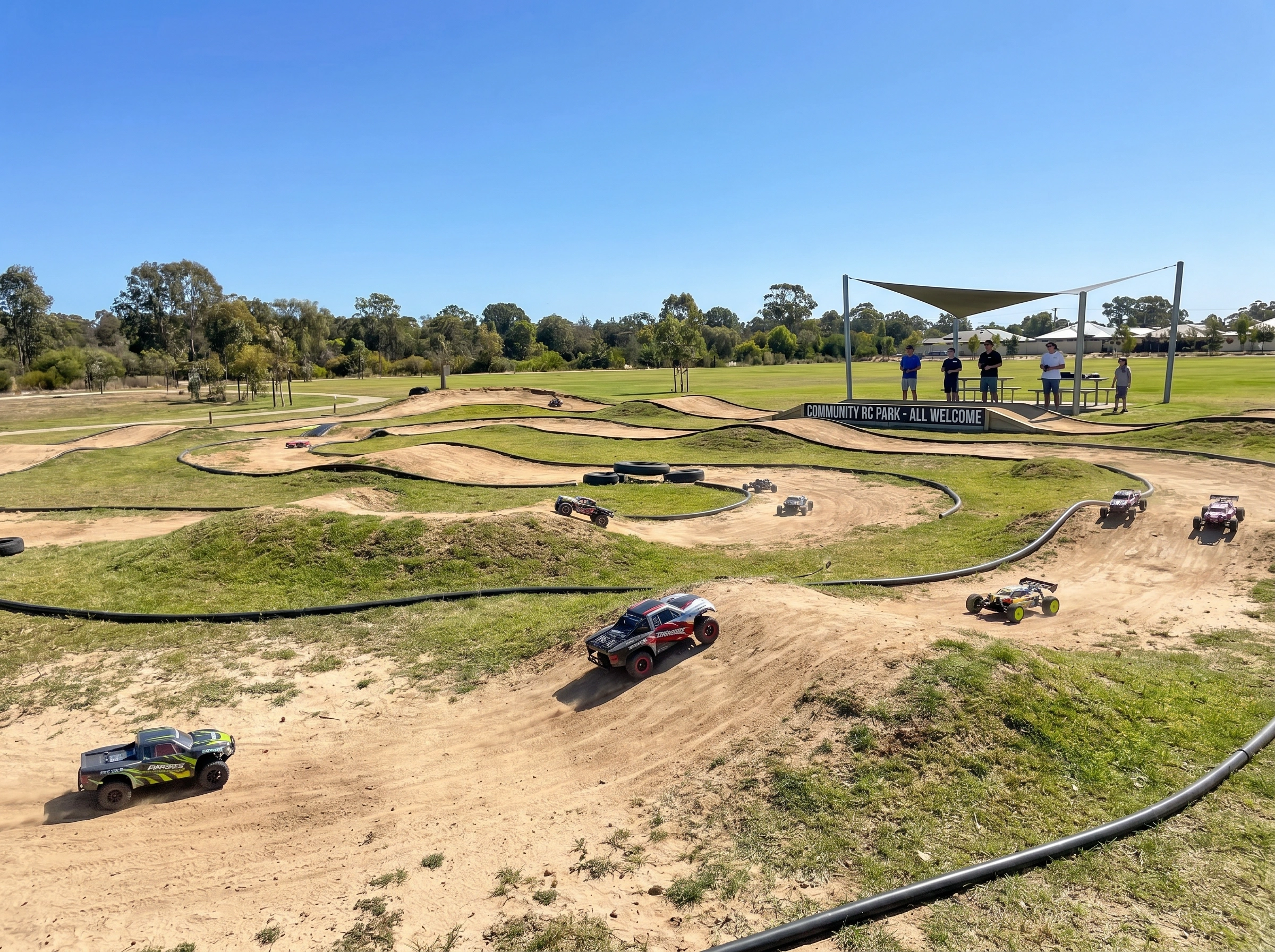
If you’re new to driving RC cars outdoors, dirt trails are probably the best place to begin. Dirt offers balanced traction, forgiving landings, and natural terrain variation without being overly destructive to your RC vehicle.
Unlike asphalt or concrete, dirt absorbs impacts better. Crashes usually result in dust instead of broken suspension arms or damaged bearings. That’s one reason why RC off-road trails remain one of the most popular choices for hobby-grade RC drivers.
The traction level on dirt is also easier to manage. Loose soil, packed earth, and damp terrain all react differently, which helps you understand RC car traction control naturally through experience.
Many RC enthusiasts prefer wooded trails, ATV paths, and natural double-track routes because they create realistic off-road conditions for:
- RC car trail driving
- RC crawling
- Suspension testing
- Tire grip evaluation
- Throttle control practice
After rainfall, dirt trails often become even better. Moist soil creates additional grip and improves vehicle stability during turns and climbs.
Choosing the Right Dirt Trail
Not every trail is suitable for RC driving. Look for areas with:
- Open visibility
- Moderate terrain variation
- Minimal foot traffic
- Stable dirt conditions
- Safe elevation changes
Private land with permission is ideal. Public parks and protected nature areas may prohibit RC vehicles, especially motorized RC off-road trucks and crawlers.
Popular RC trail vehicles for dirt terrain include:
- Traxxas Slash
- Traxxas TRX-4
- ARRMA Kraton
- Axial SCX10
- Redcat Gen8
- Team Associated RC10
Smooth Terrain and Predictable Handling
Skate parks offer one thing many outdoor locations do not: consistency.
Concrete surfaces provide stable grip, predictable handling, and smooth transitions that make them excellent for practicing advanced RC car driving techniques.
Bowls, ramps, and curved sections help drivers improve:
- Cornering precision
- Brake control
- Jump timing
- High-speed stability
- Steering response
Unlike rough terrain, skate parks allow you to focus entirely on driving mechanics without constantly fighting unpredictable surfaces.
For high-speed RC vehicles like the Traxxas Rustler, XO-1, or ARRMA Infraction, smooth skate park surfaces can feel incredibly responsive.
Respecting Shared Public Spaces
Most skate parks are designed for skateboarders and BMX riders, not RC vehicles. Always check local rules and avoid busy hours.
The best times for RC driving are usually:
- Early mornings
- Weekday afternoons
- Off-peak hours
Being respectful matters because RC communities lose access to locations when drivers ignore rules or disturb others.
Where RC Car Crawling Gets Serious
Rocky terrain completely changes how you drive. This is where RC car crawling becomes technical instead of casual.
Uneven rocks, loose gravel, stone ledges, and elevation changes force you to think carefully about:
- Tire placement
- Weight transfer
- Suspension articulation
- Differential traction
- Throttle modulation
Rock crawling is especially popular with scale RC vehicles like:
- Traxxas TRX-4
- Axial Capra
- SCX10 Pro
- Element Enduro
- Vanquish VS4-10
These vehicles are specifically designed for technical crawling performance.
The Reality of Technical Terrain
Rocky terrain improves your driving skills faster than almost any other environment because mistakes become obvious immediately.
Poor throttle control causes rollovers.
Bad line choices damage suspension components.
Improper weight balance reduces climbing ability.
Technical RC crawling teaches patience and vehicle control in ways smooth terrain never can.
The downside is wear and tear. Rocks destroy bearings, scrape chassis rails, and crack plastic parts over time. Serious RC crawlers usually carry spare links, tools, and replacement hardware during sessions.
RC Car Sand Driving Basics
Driving RC cars on beaches sounds simple until you actually try it.
Wet sand near the shoreline is compact, smooth, and surprisingly grippy. Dry sand higher up the beach behaves completely differently and can bury tires instantly.
RC car sand driving requires:
- Paddle tires
- High wheel torque
- Proper tire pressure
- Waterproof electronics
- Sand-resistant bearings
Vehicles with strong brushless systems and large tires perform much better in sand conditions.
Popular beach RC models include:
- Traxxas X-Maxx
- ARRMA Mojave
- Losi Super Baja Rey
- Traxxas Maxx
- ARRMA Outcast
Protecting Your RC Car from Salt Water
Salt is brutal on RC electronics and metal components.
After beach driving sessions, always:
- Rinse the chassis with fresh water
- Clean bearings
- Dry electronics completely
- Re-lubricate moving parts
- Inspect motor cooling fans
Salt corrosion can destroy bearings within days if ignored.
Why Forest Terrain Feels Different
Forests create some of the most realistic RC off-road trail conditions possible.
Roots, mud, leaves, uneven ground, rocks, and hidden obstacles constantly force you to adapt your driving style.
Forest RC driving improves:
- Reaction time
- Steering precision
- Terrain awareness
- Suspension tuning
- Speed management
Every few feet, the terrain changes completely. That unpredictability makes forest driving both frustrating and addictive.
Hidden Dangers in Forest Terrain
Forest trails can damage RC cars quickly because hazards are often hidden under leaves, dirt, or brush.
Common problems include:
- Hidden roots
- Deep mud holes
- Sharp rocks
- Sudden drop-offs
- Water crossings
Losing visual contact with your RC vehicle in dense terrain is also common, especially with smaller scale crawlers.
A headlamp or LED light kit becomes extremely useful during evening RC trail driving sessions.
The Most Accessible RC Driving Locations
Empty industrial lots, unused parking areas, and abandoned concrete spaces are surprisingly popular among RC enthusiasts.
These locations usually offer:
- Open visibility
- Mixed terrain surfaces
- Long acceleration zones
- Space for jumps
- Room for speed runs
For bash-style RC driving, abandoned lots can be excellent.
High-speed RC vehicles like the ARRMA Typhon, Traxxas Rustler, and Team Corally models work especially well in these environments.
Watch for Hidden Surface Problems
Old concrete and asphalt surfaces can be deceptive.
Loose gravel, hidden cracks, soft pavement, and uneven elevation changes often appear suddenly during high-speed runs.
Always inspect the area before driving.
Essential RC Car Driving Techniques for Outdoor Terrain
Different environments require different RC car driving techniques.
Throttle Control
Smooth throttle input improves traction and reduces wheel spin on loose terrain.
Weight Transfer
Understanding how your RC vehicle shifts weight during climbs, turns, and descents improves stability.
Tire Selection
Different tires matter more than most beginners realize.
- Paddle tires for sand
- Soft compound tires for rocks
- All-terrain tires for trails
- Street tires for skate parks
Suspension Tuning
Proper suspension setup helps maintain traction across rough RC off-road trails.
RC Car Safety Tips That Actually Matter
Outdoor RC driving is generally safe, but there are important precautions every driver should follow.
Maintain Visual Contact
Always keep your RC car visible.
Losing sight of your vehicle can result in accidents, property damage, or injury.
Inspect Your Battery Packs
Lithium polymer batteries can become dangerous if punctured or damaged during crashes.
After hard impacts:
- Check for swelling
- Inspect wiring
- Monitor battery temperature
- Remove damaged packs immediately
Wear Eye Protection
Dust, gravel, and debris frequently kick up during off-road RC driving sessions.
Protective glasses help prevent unnecessary injuries.
Respecting Public Spaces and Trails
Responsible RC driving protects access for everyone in the hobby.
Always:
- Follow posted signs
- Avoid protected wildlife areas
- Respect hiking trails
- Clean up broken RC parts
- Avoid damaging terrain
- Give space to other people
Most people enjoy watching RC vehicles when drivers behave responsibly.
Final Thoughts on the Best Places to Drive RC Cars Outdoors
The best places to drive RC cars outdoors depend on what kind of experience you want.
If you enjoy speed and control, skate parks and open lots work perfectly.
If you prefer technical challenges, rocky RC crawling terrain is hard to beat.
For immersive RC trail driving, forests and dirt paths create the most realistic off-road experience.
Every terrain teaches something different about vehicle setup, suspension tuning, traction control, and driving skill.
The best thing you can do is explore your local area, test different environments, and learn how your RC car reacts to changing conditions.
That’s where the real fun begins.